

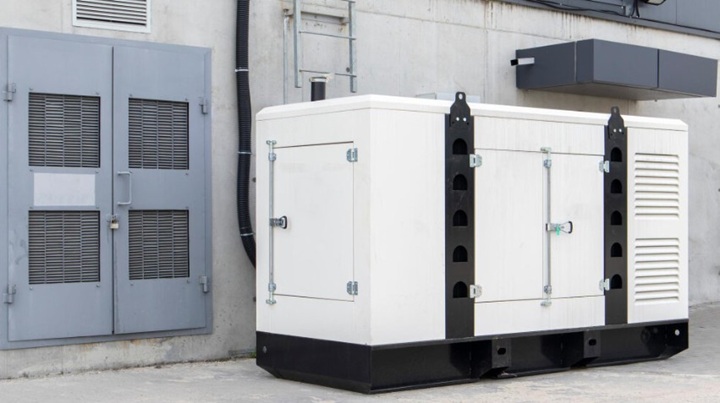
There’s a construction site in Abu Dhabi that had been running two shifts without complaint from the surrounding area — until they pushed into a third. The neighbourhood wasn’t having it. Noise complaints came in within the first week, the local authority got involved, and the site was restricted to daytime-only operations while the issue was resolved. The equipment causing most of the problem wasn’t the heavy machinery. It was the generator running the site’s electrical systems through the night.
That kind of disruption is more common than site managers like to admit, and it tends to arrive at the worst possible moment — mid-project, when losing shift hours has an immediate cost. The switch to a silent generator wasn’t the only fix they needed, but it was the one that got the third shift back.
Why Generator Noise Becomes A Site Management Problem
Construction noise is expected. What neighbours and local authorities tend to draw a harder line on is sustained mechanical noise through hours when activity should have wound down. A standard diesel generator running at load produces sound levels that are difficult to argue away, regardless of how necessary the power is. It’s one of those site issues that looks like an equipment problem but lands as a compliance problem.
The sites that run into this most often are those in mixed-use or residential-adjacent areas, and in the UAE, that category covers a significant portion of active developments. Planning for it at the equipment selection stage is considerably less painful than retrofitting a solution after the complaints have started.
What This Has To Do With Dumper Operations
The connection between generator choice and dumper efficiency isn’t immediately obvious, but it’s real. Dumpers on a construction site run on schedules that depend on the broader site rhythm — loading, transport, tipping, and return. When noise restrictions compress the hours a site can operate, the dumper cycle gets squeezed into a shorter window, which means either fewer cycles per day or pressure on operators to move faster than is comfortable.
Sites running on extended hours because of a silent generator setup don’t face that compression. The dumper fleet can run the cycle it was planned around, operators aren’t being pushed, and the output the schedule was built on actually gets delivered. The generator choice, in that sense, directly determines how much productive time the earth-moving operation actually has.
Portable Options And Where They Fit
Not every site needs a permanent generator installation. For smaller operations, or for sites where the power requirement shifts as work progresses through different phases, a portable generator with acoustic housing covers the noise requirement without the commitment of a fixed setup. The tradeoff is output capacity — portable units tend to be rated for lighter loads — but for sections of a site that don’t need heavy sustained power, they’re a practical middle ground.
The mistake is treating the portable option as universally interchangeable with a full installation. Running heavy equipment charging, lighting systems, and welfare facilities off a portable unit that was specced for two of those three things tends to end with the generator running hot, tripping under load, or requiring more frequent servicing than anyone budgeted for.
The Broader Efficiency Argument
Efficiency on a construction site is rarely the product of one decision. It accumulates from a series of choices that either give the operation room to run as planned or introduce friction that compounds across weeks and months. Generator selection sits in that category — it’s not glamorous, it doesn’t show up in project photography, and it tends to get decided on price rather than fit.
The sites that run extended hours without regulatory interruption, keep their dumper cycles intact, and avoid the kind of noise-related delays that eat into programme time have usually made a deliberate call about power infrastructure early in the planning process. The silent generator isn’t a premium add-on in that context — it’s the option that keeps everything else moving.