

Have you ever pulled a fresh pita bread apart and marveled at that perfect, steam-filled center? It’s the ultimate vessel for hummus or falafel, but achieving that consistent “pocket” isn’t just a baker’s trick, it’s a high-stakes game of thermodynamics. In the world of industrial baking, creating that gap thousands of times an hour requires a blend of brute force and surgical precision.
Scaling to 16,000 Units: The Shift from Craft to Industrial Excellence
There’s something romantic about a craft baker tossing dough by hand, but when you have a contract to supply a thousand supermarkets, romance doesn’t pay the bills, throughput does. The jump from a manual operation to an industrial powerhouse is a massive leap. If you’re currently pushing out a few hundred loaves an hour, imagining a jump to 16,000 might feel like moving from a bicycle to a jet engine.
To make that transition, you need more than just more hands; you need a sophisticated pita bread machine that understands the delicate nature of the dough. We’re talking about a system that treats every piece of dough with a “gentle touch” to preserve its biological integrity while moving it through the line at breakneck speeds. It’s this balance of high-velocity output and quality control that separates the global market leaders from the local players.
Precision at 900°F
Since 1957, Polka Ltd. has operated under a simple but powerful doctrine: “Fire and Steel.” Why? Because to bake a world-class pita or naan, you need an instantaneous thermal shock. We are talking about temperatures that would make a standard kitchen oven weep, often soaring up toward 900°F.
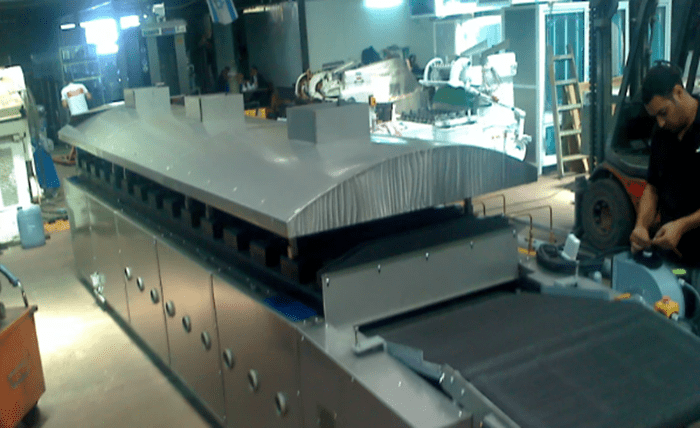
Building equipment that can survive that kind of heat 24 hours a day, seven days a week, is where the “Steel” part comes in. Direct fire tunnel ovens are essentially high-tech chambers where flames kiss the dough directly, creating a searing heat that flashes moisture into steam. This steam is what inflates the dough like a balloon, creating that iconic pocket. Without the heavy-duty engineering of Israeli-designed steel, these ovens would buckle under the thermal stress. Instead, they stand as the reliable heart of the production line.
Why Every Industrial Bakery Needs a Custom Line
Let’s be honest: no two bakery floors are identical. One might be a long, narrow hallway in an old industrial park, while another is a sprawling, multi-level modern facility. This is why “off-the-shelf” machinery is often a recipe for frustration. You wouldn’t buy a suit without getting it tailored, so why would you invest millions in a production line that doesn’t fit your space?
True engineering expertise lies in customization. By designing a line that wraps around corners, utilizes vertical space, or integrates specifically with your existing mixing units, you eliminate wasted movement. This bespoke approach ensures that your flour-to-bread ratio is optimized and your labor costs stay low. It’s about making the machine work for you, not the other way around.
Beyond Pita: Versatility in Flatbread, Pizza, and Naan Production
While the “pita pocket” is our claim to fame, the technology doesn’t stop there. The beauty of a high-temperature tunnel system is its incredible versatility. The global palate is changing, and consumers are hungry for everything from charred Indian naan to thin-crust Italian pizza and fluffy focaccia.
By adjusting the flame intensity and the conveyor speed, a single production line can become a multi-product powerhouse. This versatility allows bakery owners to pivot with market trends without having to rip out their entire infrastructure. Whether you’re baking for a local deli or an international airline, the goal remains the same: consistency, color, and that unmistakable fresh-baked aroma.
Transforming Your Business with Polka
The journey from a small-scale bakery to a global bread supplier is paved with smart engineering choices. In an industry where margins are thin and expectations are high, your equipment is your greatest competitive advantage. By harnessing the raw power of direct fire and the reliability of Israeli steel, you can turn a simple mixture of flour and water into a scalable, profitable empire.