

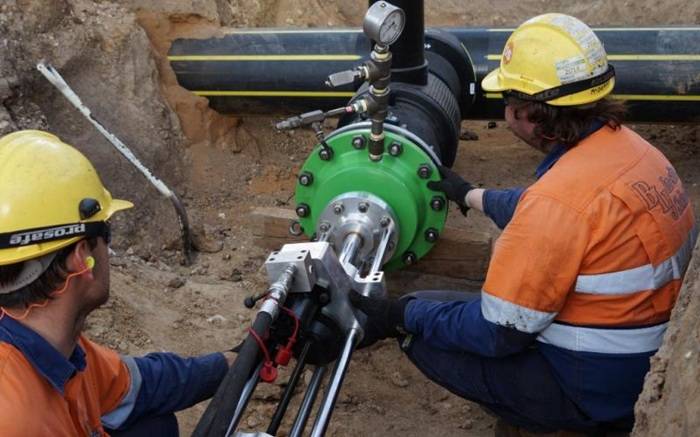
Most people have never heard of hot tapping. But if you have ever used a gas cooker, turned on a tap, or walked past a building site with pipes being laid underground, there is a good chance that hot tapping played a part somewhere along the way.
So what exactly is it, and why do so many industries rely on it?
The Basic Idea
Hot tapping is a way of making a new connection to a pipe or pipeline while it is still in use. That means the fluid or gas inside the pipe keeps flowing the whole time. Nobody has to shut anything down. Nobody has to drain the system. Work just happens while everything carries on as normal.
To put it simply: imagine you want to add a new branch to a water pipe that is already running. Normally, you would have to turn the water off first. Hot tapping lets engineers do the same job without stopping the flow at all.
How Does It Work?
A specialist clamps a fitting around the outside of the live pipe. A drill then cuts through the pipe wall from inside that sealed fitting. Because the fitting is already sealed and pressurised before the cut is made, nothing escapes. Once the hole is made, a new connection is in place and the process is complete.
The whole operation is carried out under pressure. That is why it takes skill, the right equipment, and proper training to do it safely. When businesses look for hot tapping companies uk, they are looking for teams with the experience and kit to handle live systems without incident.
Where Is Hot Tapping Used?
You will find hot tapping used across a wide range of industries. Some of the most common include:
Oil and gas. Refineries and processing plants often need new branch lines added to existing pipework. Shutting down even one section can cost huge amounts of money, so keeping the system live is essential.
Water utilities. Water companies use hot tapping regularly to extend mains or repair parts of a network without cutting supply to homes and businesses.
District heating. Many towns and cities have underground heating networks. Hot tapping allows new buildings to be connected without disrupting the system for existing users.
Industrial manufacturing. Factories with cooling or process pipework often cannot afford downtime. Hot tapping keeps production moving while connections are added.
What Are the Advantages?
The biggest benefit is continuity. There is no need to shut down a pipeline, depressurise it, drain it, and then refill and re-pressurise it afterwards. All of that takes time and costs money. Hot tapping removes those steps entirely.
It is also safer in some situations than a traditional shutdown. Draining a large gas or chemical pipeline carries its own risks. Keeping the system pressurised and controlled can actually be the lower-risk option when it is carried out by a qualified team.
There are environmental benefits too. Draining a pipeline can mean disposing of large volumes of fluid safely. Hot tapping reduces or removes that need entirely.
Are There Any Limitations?
Hot tapping is not suitable for every situation. The pipe material, its condition, the pressure it is running at, and what is inside it all affect whether hot tapping is the right choice. Very high-pressure systems, corroded pipes, or certain chemicals may rule it out. A qualified engineer will always assess the specific situation before deciding on the best approach.
Cost is another factor. Hot tapping requires specialist equipment and trained personnel. For smaller jobs where a shutdown is practical and low-cost, it may not be worth it. But for large industrial systems, the savings from avoiding downtime almost always outweigh the service cost.
Finding the Right Service
Because hot tapping involves working on live, pressurised systems, choosing the right company matters. Businesses looking for reliable hot tapping companies uk should look for providers with a clear track record, relevant industry accreditations, and experience across different pipe materials and pressure levels.
Hot tapping is one of those engineering solutions that most people never think about, yet it keeps some of the most important systems in the country running without interruption every day.