

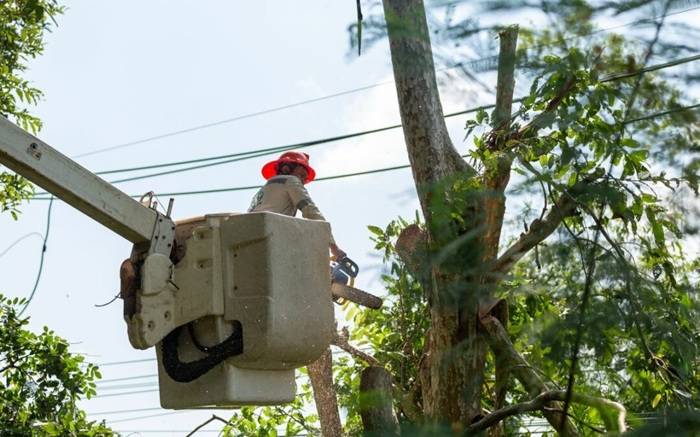
Outdoor spaces on commercial sites do more than provide a backdrop. Overgrown vegetation can block drainage, damage structures, restrict access, and create safety hazards for staff and visitors. Keeping land in good condition is both a practical responsibility and, in many cases, a legal one.
Vegetation management covers a broad range of services. It includes cutting grass and clearing scrub, controlling invasive plant species, managing hedgerows, and maintaining trees. These tasks apply across many types of sites, including industrial estates, schools, hospitals, retail parks, and public green spaces.
What vegetation management actually involves
At its most basic level, vegetation management means keeping plant growth under control so that land stays safe, accessible, and functional. On a busy commercial site, this might mean regular grass cutting to prevent fire risks during dry weather, or cutting back overhanging branches that could damage vehicles or obstruct signage.
On larger or more complex sites, the work goes further. Drainage ditches must be kept clear of reeds and encroaching vegetation to prevent flooding. Embankments and verges along roads or railways need regular treatment to stop plants from undermining surfaces or restricting sightlines. Invasive species such as Japanese knotweed require careful, specialist handling to prevent them from spreading and causing structural damage.
Why professional services are worth considering
Managing vegetation across a large or complex site is not always something in-house teams can handle efficiently. The equipment required for large-scale grass cutting, hedge trimming, or tree work is costly to buy and maintain. Staff also need appropriate training to work safely, particularly around power tools or when working at height.
Professional vegetation management companies bring specialist equipment, trained operatives, and an understanding of how different environments need to be managed through the seasons. There is also a compliance dimension. Businesses that own or occupy land have a duty of care under health and safety legislation. Poorly maintained grounds can lead to accidents involving members of the public or employees. Getting vegetation management right reduces that risk and supports broader site safety standards.
Seasonal considerations for site managers
Vegetation does not behave the same way year-round, which means management programmes need to reflect seasonal changes. Spring and early summer tend to be the busiest periods for grass cutting and hedge trimming. Autumn brings leaf fall, which can block drainage channels and make surfaces slippery.
Winter is often an opportunity to carry out more structural work, such as tree pruning or clearance projects, when plants are dormant and disturbance to wildlife is lower. Many professional vegetation management companies offer scheduled maintenance contracts that align with these seasonal patterns, giving site managers a predictable programme of work.
Planning ahead also helps avoid reactive spending. Emergency clearance, such as removing a fallen tree or clearing a flooded drain, tends to cost more than routine maintenance. A consistent schedule reduces the likelihood of these situations arising.
Balancing maintenance with environmental responsibility
Commercial site managers increasingly need to consider the environmental impact of how land is managed. Cutting too frequently, or using herbicides unnecessarily, can reduce biodiversity and damage local ecosystems. Responsible vegetation management seeks to balance keeping sites safe and functional with protecting the natural environment.
This might mean leaving some areas of grass to grow longer to support pollinators, or choosing mechanical removal over chemical treatment where possible. Planting native hedgerow species to replace old fencing can improve both the appearance of a site and its value to local wildlife.
For many organisations, demonstrating environmental responsibility matters to stakeholders, tenants, and the communities in which they operate. Good vegetation management, carried out thoughtfully, can support that goal.