

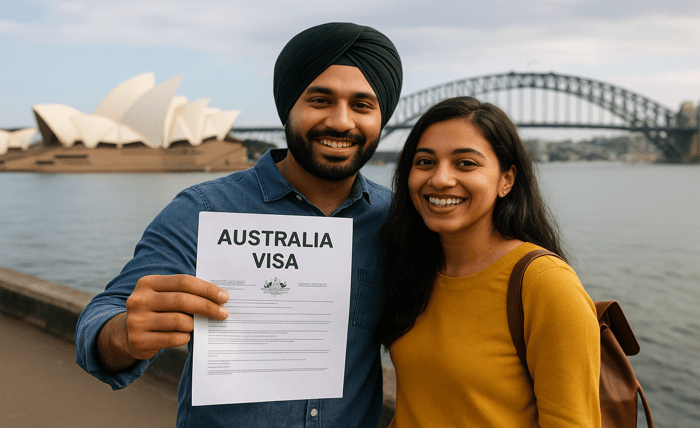
A trip to Australia is a dream for many Indians. The vast landscapes, unique wildlife, vibrant cities, and rich culture make Australia an unparalleled experience. The first step of the visa process, for any Indian aspiring to see this country on screen, is getting an Australia Visa for Indians. Learn about the procedure of visa grants, major requirements, and essential tips for visiting Australia, which will make your trip so much easier and more fun!
Why Australian Visa Is Required By Indian Citizens
To enter concertedly into Australia, an Indian citizen needs an Australian visa. The visas ensure that the traveler complies with the Australian Government’s legal and health stipulations before entering Australia. Different classes of visas are issued depending on their purpose, such as tourism, business, work, or study. Tourists apply for the most common one, called Visitor Visa (Subclass 600), which grants entry for single entry for a limited duration of stay in Australia.
Various Types of Australia Visa for Indians:
Australia has a wide range of visas for tourists, business visitors, students, and professionals. Options are available for many purposes of visiting, business activity, and temporarily residing in Australia. Being educated about the options available will help with your visa choice for the study or work you will undertake in Australia.
- Visitor Visa (subclass 600)
- Business Visa
- Student Visa (subclass 500)
- Work Visa
- Partner and Family Visas
Selecting the appropriate type of Australia visa for Indians is critical; each visa type requires different documentation and evidence of eligibility that you must comply with to reduce or eliminate potential delays or refusals.
Step-by-Step Application Process for an Australian Visa for Indians
While the process of applying for an Australia Visa for Indians has always been simple, one must pay attention to the particulars. Applications are filed either online or taken to the Australian Visa Application Centre through Courier.
1. Document Collection
The first step is to collect the documents that will be required during the application process. Usually, these will include:
- Original passport(validity of min. 6 months from the intended date of travel).
- Recent passport-size photograph.
- Documentary evidence to prove the stability of your finances, ie. bank statements, salary slips, and/or property-related documents.
- Travel itinerary having bookings for the stay at least.
- Health insurance coverage for your stay.
- Statement of purpose or a covering letter clearly stating your reason for travel.
2. Complete the Application Form
Proper attention must be given to complete the visa application form correctly. Any errors, such as a misspelling of the name or an incorrect date, or any discrepancy in relation to the supporting documentary evidence, may result in a delay. If the application is made online, ensure the scanned copies of the documents are clear and legible.
3. Payment of Visa Fee
Fees vary according to the type of visa and duration of stay. The visa fees must be remitted through official channels to avoid forgery scams. Surely, you need to have either a receipt or some form of confirmation for the payment made.
4. Biometrics and Medical Examination
The applicant submits biometric data such as fingerprints or undergoes medical examinations to prove that they meet health and security requirements in Australia. These sets of requirements are important in the case of long-stay, student, or work visas.
5. Submit Your Application and Track It
Once an application is submitted online, an applicant may track its progress. Processing could take from a few days to weeks, depending on the time of the year and type of visa. Check for updated status regularly and always reply to requests for additional information promptly.
Challenges Faced and Ways to Overcome
On a few occasions, the Australian visa application process presents certain special challenges for the Indian applicant. Knowledge and preparedness are paramount for averting these common traps.
- Incomplete Documentation: All required documents should be submitted. Exclusion largely accounts for delayed applications.
- Financial Proof Issues: The Australian authorities wish to establish that tourists can maintain themselves. A good set of bank statements and similar financial documents would greatly enhance your case.
- Travel History: Having an excellent international travel history will smoothen the applications. First-time applicants may be requested to submit stringent documents.
- Processing Delays: During peak seasons, visas usually undergo extreme delays. Applying well before this holds great importance so you are never in a rush.
- Misinterpretation Of Visa Conditions: Some visas clearly define limited references of entries that can be carried out, work that can be done, and the duration of stay; the traveler must read and understand all the conditions well ahead of entering a country.
Beginners could consider the assistance of an entire visa consultancy company like OneVasco, which ensures that your application is perfectly prepared and speedily processed.
Tips for Planning Your Travel
When you get your Visa, you want to make travel plans accordingly to make the most enjoyable trip.
Seasonality:
Australia is a vast landmass with many climate variations in different regional areas. In general, summer in the southern parts of Australia such as Sydney or Melbourne (December-February) is best to travel, while the northern part of Australia, such as Queensland, winter (June-August) is likely (but not always) the best time to travel there.
Travel Insurance:
Even with a valid visa, medical emergencies may be expensive. You should purchase a comprehensive travel insurance package.
Currency and Payments:
Cash is not heavily used in Australia as most places take cards but some small purchases will be especially if done at a cash-only place (you will need cash is Australian dollars (AUD).
4. Local Laws & Customs:
It is important to learn about Australian laws and local customs and any local laws in order to prevent any confusion or problems between people and systems.
5. Transportation, Connectivity:
Transportation options in the main cities in Australia are generally very good (e.g. buses, trains, trams etc.). In more remote places, it is best to hire/rent a car, as sometimes the distances between destinations is considerable.
Top Places to Go: Australia has many great places to see depending on what you want to learn about.
- Sydney: The Opera House, Harbour Bridge and Bondi Beach are famous, and in this city it works as it allows for the rhythm of both city and nature to come together well.
- Melbourne: For this reason, Melbourne is important to understand as it is considered the cultural capital of Australia. Melbourne has a distinct arts culture, there is growing music culture, coffee culture and sporting events culture.
- Queensland and the Great Barrier Reef: Lots of sun, tropical rainforest, coral reefs and beautiful beaches makes this a great get away, for those that love nature.
- The Outback: Massive deserts, red soil, amazing animals and an adventure that comes from this incredible part of the world.
- Tasmania: To explore untouched wilderness, hiking and splendid colonial past.
Conclusion
Ultimately, although planning a long sought-after journey to Australia might be in the works, it starts with your first permanent step to your memorable and now once-in-a-lifetime trip to the Southern Hemisphere which relates to applying for an Australia Visa for Indians. Blending knowledge about the appropriate Australia visa that suits your needs, understanding the required documents, and draining any normal issues out by being prepared, will lead to a much smoother visa process by preventing unnecessary glitches. Working with professionals as through OneVasco will ensure your visa application has each required piece, provide you with a streamlined and manageable process, and reduce errors and/or delays in your final application and submission.
After completing your visa process there is a breadth of exciting things waiting for you in Australia, vibrant cities, beautiful gold coast beaches, adventures with wildlife, and amazing nature sights/attractions. If you are visiting for a couple of weeks as a tourist, or if you will be studying or working a couple of months in Australia, you will have the opportunity to truly experience the Southern Hemisphere, and preparation is always key to the success of your travels.