

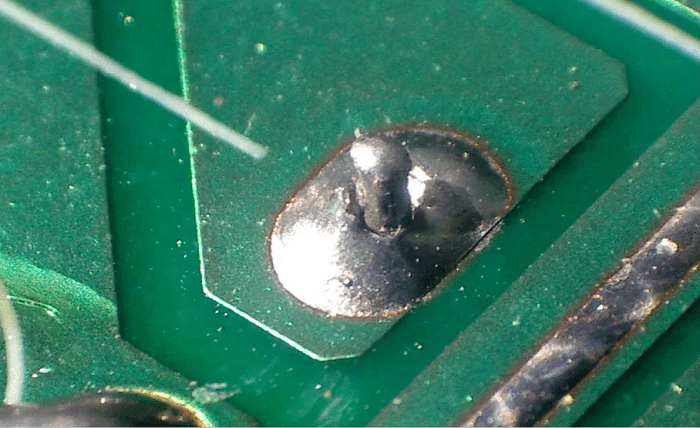
Soldering is the foundation of connecting components on printed circuit boards (PCBs) or other metallic surfaces in the complex world of electronics. But problems like solder bridge and cold solder junctions can occur during the soldering process, endangering the dependability and functionality of electronic equipment. It is important for manufacturers and enthusiasts alike to comprehend these phenomena, their ramifications, and how to recognize and address them.
Solder Joints: The Foundation of Communication
The essential components of electronic connectivity are solder junctions. Solder, a metal alloy with a low melting point, is melted to make them by joining two or more conducting surfaces together. A robust electrical connection and mechanical stability are provided by well-executed solder connections, guaranteeing the circuit’s integrity.
A well-made solder junction has a number of qualities. Its smooth, glossy appearance is the first indication of adequate wetting and adherence to the surfaces being bonded. Second, a concave fillet of solder forms around the PCB pad or component lead, indicating sufficient bonding and full coverage. Last but not least, the joint needs to be strong enough to endure the mechanical and thermal strains that come with operation.
Connectivity Problems: The Root Cause of Cold Solder Joints
On the other hand, one prevalent soldering flaw that can affect electronic assemblies is cold solder connections. When solder is unable to flow properly and form a bond with the surfaces it is meant to join, these joints result. Cold solder junctions can be caused by a number of things, such as insufficient heat, insufficient solder flux, contamination, or improper soldering technique.
The primary method for identifying cold solder junctions is visual inspection. Cold solder junctions frequently lack the distinctive sheen of a well-formed joint and have a drab, gritty look. They might also show imperfections like pits, cracks, or voids, which would suggest insufficient bonding. These visual clues function as warning signs to be looked at further.
Electrical testing is a useful tool for confirming the integrity of a solder junction. It is possible to evaluate the continuity of the joint by using a multimeter configured to detect resistance. Poor electrical connection, which may be indicative of a cold solder joint, is indicated by a high resistance value or an open circuit.
Solder Bridges: Inadvertent Linkages
Solder bridges provide a whole other set of difficulties than cold solder junctions, which prevent correct communication. Excess solder can cause accidental connections between nearby conducting locations on a PCB, a condition known as solder bridges. Usually, this issue results from using too much solder or from using poor soldering skills, which causes conductive pathways to unintentionally emerge where none should.
Solder bridge identification necessitates close visual inspection. Shiny, continuous blobs of solder that span the space between two or more conducting points are the unintentional connections. Technicians are able to locate spots where accidental connections have been made by following the solder traces.
Fixing Soldering Errors: Optimal Procedures
A methodical strategy is necessary to address soldering faults such as solder bridges and cold solder connections. First and foremost, figuring out the problem’s underlying source is crucial. Understanding the underlying causes is crucial for an efficient resolution, whether the issue is caused by excessive solder volume, insufficient solder flux, or inadequate heat.
Corrective action can be implemented when the cause has been found. Reworking the joint with more heat and fresh solder can help ensure effective bonding in cold solder joints. In order to reduce the possibility of cold solder joints in subsequent assemblies, make sure you use enough flux and use the right soldering method.
Similarly, desoldering tools like a solder wick or solder sucker can be used to carefully remove excess solder in order to resolve solder bridges. By carefully aiming at the By using extra solder, technicians can remove accidental connections and reestablish the correct separation between conducting points.
Conclusion:To sum up, solder connections and solder bridges are essential to the dependability and operation of electronic equipment. To maintain the integrity of electronic assemblies, issues with solder bridges—which result in accidental connections—and cold solder joints—which exhibit poor bonding—must be resolved. Technicians are capable of precisely identifying these soldering flaws and putting correction measures in place through visual inspection and electrical testing. Effective mitigation of these faults can be achieved by following best practices, which include appropriate soldering procedures, appropriate heat application, and flux utilization. Fixing soldering flaws extends the life and durability of electrical devices in addition to improving their performance. In the end, soldering precision is necessary to preserve the integrity and quality of electronic systems in a variety of applications.